

If you've been exploring new home developments in Texas, you're looking in the right place. Texas has more new home communities than any other state - 4,628 communities available as of 2026 - and the momentum behind new construction shows no signs of stopping. Population growth, corporate relocations, and a generally lower cost of living than the U.S. average continue to draw buyers from across the country to the Lone Star State.
Austin, Dallas, Houston, and San Antonio are the most popular Texas cities for construction homes in Texas, but the opportunities extend well into Hill Country, the Gulf Coast, and fast-growing corridors between metros. New home developments in Texas are thriving in these major metropolitan areas, offering everything from entry-level townhomes to luxury homes on sprawling acreage.
Here's what you'll find in this guide:

The economic case for buying homes in Texas is straightforward. Texas has no state income tax, which benefits home buyers right from day one. Job growth across tech, energy, healthcare, and manufacturing continues to fuel demand, and business relocations to Texas metros have accelerated since 2024. Infrastructure expansion - new highways, utilities, and commercial corridors - has opened up suburban land that wasn't practical for development just a few years ago.
Texas has three of the four most populated U.S. cities, and that scale translates directly into builder competition and buyer opportunity. Texas new home developments prioritize affordability and lifestyle amenities in ways that many coastal states simply can't match.
Quick reasons Texas stands out for new construction:
Most buyers start their search by choosing a region, then narrow down to a city or specific community. Popular locations for new construction in Texas include Austin, Dallas Fort Worth, Houston, and San Antonio, each with its own pricing bands, home styles, and lifestyle draws. Here's a quick-scan overview before we dive deeper:
The Dallas Fort Worth area is one of the largest U.S. metros and a powerhouse for new construction homes. Suburbs like Frisco, Prosper, Celina, McKinney, Mansfield, and Fort Worth's western corridor are delivering thousands of homes annually. Dallas Fort Worth is popular for buyers seeking job growth and highly rated schools, and the region currently has over 25,700 new homes available from roughly 188 builders.
Price ranges in DFW are broad: entry-level townhomes and smaller-lot homes start in the low $300,000s in outer suburbs, while luxury construction homes in Prosper, Southlake, and Frisco can exceed $1 million. The median new construction home price sits around $449,990 as of mid-2026.
Key selling points for DFW:
Austin and the surrounding Hill Country towns - Dripping Springs, Leander, Georgetown, Kyle, Buda - attract tech workers, remote professionals, and lifestyle buyers drawn to the natural beauty of rolling limestone hills and live oaks. The Austin area offers new construction homes with a median price around $499,950, while the overall Austin median home sale price sits near $542,460.
Hill Country style construction homes feature stone exteriors, metal roofs, timber beams, and wide porches designed for breathtaking views. These communities cater heavily to move-up and luxury buyers, though suburban corridors like Kyle and Buda also serve first-time buyers.
Lifestyle draws in the Austin area include:
Houston has one of the largest selections of new construction homes across various price points, and the Houston area is defined by its expansive master planned communities. Suburbs like Katy, Cypress, Pearland, League City, and the I-45 North/Spring corridor are home to communities like Sunterra, Bridgeland, Meridiana, and Lago Mar. Houston new single-family home sales rose to approximately 88,634 in 2025.
The Gulf Coast influence means some communities near Galveston Bay offer water-oriented living and second-home potential. Prices in Houston MPCs tend to be more attainable than in Austin - many homes begin in the $200,000s and range up through the $800,000s.
Houston and Gulf Coast new homes may appeal to:
San Antonio is appealing for value-conscious buyers seeking newer homes, and the San Antonio area has become one of the most active markets in the state. Growth corridors along I-10, Loop 1604, and toward New Braunfels, Cibolo, and Schertz are delivering abundant new construction homes. The Central Texas corridor between Austin and San Antonio - including San Marcos, Kyle, and New Braunfels - has emerged as a major hotspot.
San Antonio's median home price hovers near $295,000, and new build communities like Prominence (a 384-acre development with 1,167 planned home sites) start pricing at $300,000. Briggs Ranch, an 800-acre community, offers homes from the low $300,000s to luxury estates above $600,000.
Popular San Antonio area submarkets include:
With 4,628 new home communities available across Texas, the options span several distinct formats. Each type comes with different architectural styles, amenity levels, and price structures. Understanding the differences helps you narrow your search faster.
Master planned communities are the backbone of Texas new home development. These are large-scale developments - often hundreds or thousands of acres - built in phases over many years, featuring coordinated amenities and typically multiple home builders.
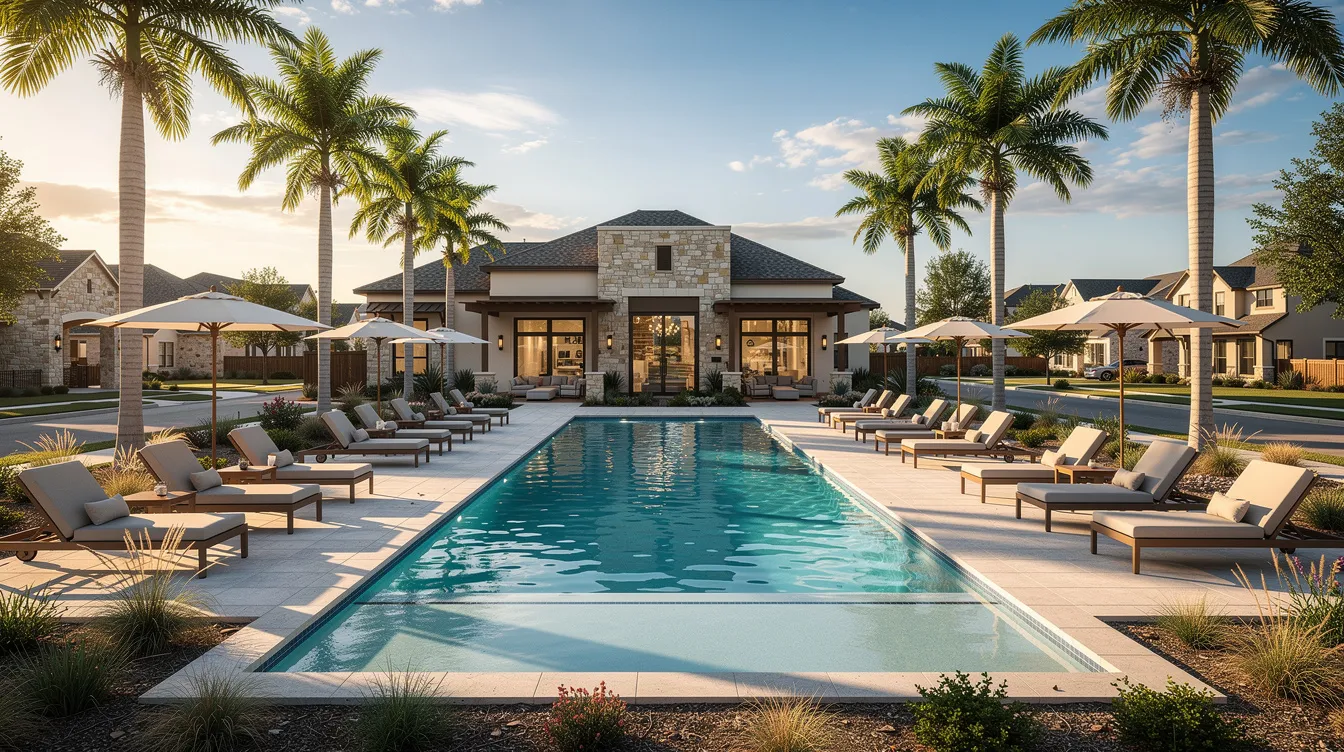
Master-planned communities combine housing with parks, schools, shopping, and recreational amenities in Texas. New communities in Texas often feature resort-style pools, playgrounds, and community clubhouses.
Common amenities to evaluate:
These communities are especially prevalent in greater Houston, Dallas Fort Worth, and San Antonio outskirts.
High-density options include increased construction of townhomes and smaller-lot single-family homes in close-in neighborhoods near downtown Dallas, Austin, and Houston. These homes offer short commutes, walkability, and proximity to dining and entertainment districts.
Tradeoffs to consider:
Urban infill suits buyers who prioritize location and convenience over lot size. If you're considering this route, ask the builder about noise insulation, parking allocations, and any planned adjacent development, and review a focused guide to buying townhomes in Fort Worth if attached or high-density living is on your shortlist.
For buyers seeking privacy and space, acreage and ranch-style construction homes outside Dallas Fort Worth and in Hill Country deliver exactly that. Lot sizes can range from one to ten or more acres, and many industry leading home builders now offer "rural-feel" communities that still have fiber internet and community amenities; Fort Worth shoppers often look at dedicated resources on buying homes with land in Fort Worth to understand these tradeoffs.
Unique considerations include:
Advantages include privacy, space, scenic views, and the ability to create a truly custom property. The tradeoff is often a longer commute and higher maintenance responsibility, and some buyers also weigh these rural options against architecturally distinctive choices like Craftsman-style homes in Fort Worth.
New homes in Texas typically include modern insulation, appliances, and HVAC systems that reflect current building standards. Most production homes use slab-on-grade foundations, and in coastal or hurricane-prone areas, wind-rated windows and stronger roofing materials come standard.
The median size of new Texas homes has dropped below 2,100 square feet, reflecting a trend toward smart layouts and efficient use of space rather than sheer square footage. Trends include open-concept layouts with modern design elements and energy-efficient building materials. Many new Texas developments focus on first-time buyers with upgrade options available.
Home designs often feature seamless transitions between indoor and outdoor spaces to enhance living experience - think covered patios, outdoor kitchens, and wide-opening sliding doors. New homes in Texas feature open floor plans and Smart Home technology, including smart thermostats and security systems.
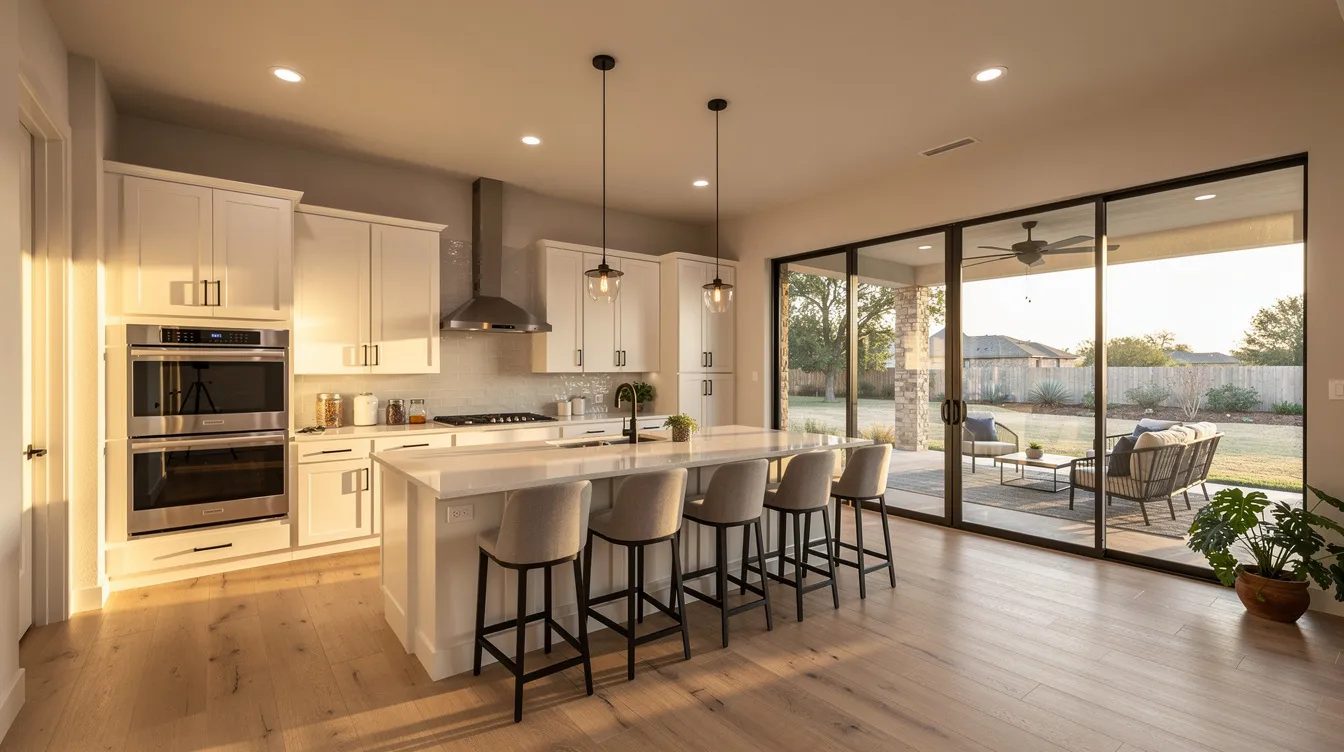
Texas offers distinct architectural personalities depending on the region:
Toll Brothers builds communities with oversized home sites and panoramic views, particularly in Hill Country and premium suburban locations. Each style reflects the landscape and lifestyle of its region.
Energy efficiency in new homes includes features like ENERGY STAR certified appliances and high-performance insulation. Texas building codes emphasize efficiency due to extreme heat, and most new construction includes radiant barriers, upgraded insulation, and 16-SEER or higher HVAC systems.
In storm-prone Gulf Coast counties, resilient construction adds wind-rated roofing, impact glass options, and engineered drainage planning.
Smart home technology such as smart thermostats and security systems are increasingly common in new homes. Features to look for or ask your builder about:
The general home building process follows a clear path: community selection, contract signing, design selections, construction, inspections, and closing. Timelines in 2025–2026 typically range from 6 to 12 months for most production builders, with variations based on labor and material availability, and keeping an eye on an up-to-date Fort Worth market overview can help you time your purchase within broader price and inventory trends.
Understanding the difference between to-be-built homes, spec or quick move in homes, and custom builds helps set realistic expectations. Quick move in homes (also called move in ready homes) are already under construction or complete and available for purchase now - they offer shorter wait times but fewer customization options, and browsing curated Dallas Fort Worth property listings with Melissa Serna can give you a sense of what’s available at each stage of construction.
Three categories define the builder landscape:
Choosing between these categories depends on your budget, timeline, and how much you want to personalize your dream home.
Standard warranty structures in Texas new construction typically include:
These are general benchmarks - always request the builder's specific written warranty documents. Third-party inspections at major milestones (foundation, framing, pre-drywall, and final walkthrough) provide additional quality assurance. Exceptional quality starts with transparency, so compare warranty coverage and builder reputation as part of your decision-making process.
Key warranty questions to ask:
Pricing for new construction homes varies widely by city, community, and builder. Increased inventory allows buyers in Texas to have more choices and stronger builder incentives - a real advantage in the current market. With mortgage rates projected around 6.3% for 30-year fixed loans in 2026, many buyers find that negotiating incentives is more productive than waiting for base price drops.
Common builder incentives include:
Financing options include conventional loans, FHA and VA programs, and builder-preferred lenders. Your sales consultant at any community can walk you through available programs, but it's always wise to get pre-approved independently first. Consult a licensed lender or financial advisor for guidance on your specific situation.
Lot premiums add cost based on features like cul-de-sac location, greenbelt views, waterfront proximity, or oversized dimensions. In some DFW developments, the difference between new construction and resale can run $200–$400 per month in additional tax and district burdens.
HOA fees in amenity-rich home communities typically cover pool maintenance, landscaping, security, and community programming. MUDs (Municipal Utility Districts) and PIDs (Public Improvement Districts) are common in Texas developments and fund infrastructure - they add incremental taxes that may not appear in the base advertised price.
Budgeting checklist when comparing communities:
With 4,628 new home communities available across Texas, having a framework helps. Explore communities based on lifestyle fit, commute patterns, school access, amenity packages, and future growth plans. Visiting model homes is essential - tour at different times of day and, if possible, speak with current residents to get a feel for community culture.
Evaluate nearby construction pipelines: future phases, commercial projects, and road expansions can all affect long-term value and daily life.
School district ratings heavily influence home values in metro areas like Dallas Fort Worth, Houston, and Austin. Before choosing a community, verify district boundaries - they can change, and a home's district assignment isn't always obvious from its address.
Practical checks:
Resort-style amenities in communities often attract families and promote recreational lifestyles. Pools, trails, dog parks, clubhouses, and organized events create a great experience and a sense of belonging. Some Texas communities offer niche lifestyles: 55+ active adult, golf-focused, equestrian, lakefront, or urban live-work hubs.
Questions to ask when you discover a community that interests you:
The Dallas Fort Worth market remains one of the most active in the country for new home development. Northern suburbs like Frisco, Prosper, and Celina continue to lead in demand, while southern and western cities like Mansfield, Aledo, and Forney are gaining attention from buyers looking for value.
Typical DFW new home sizes range from 2,000 to 4,000+ square feet with 3 to 5 bedrooms and 2- to 3-car garages. Infrastructure projects and major employer campuses continue to support construction across the region, and working with an experienced Dallas Fort Worth Realtor like Melissa Serna can help you zero in on the right communities and floor plans.
What draws buyers to Dallas and Fort Worth:
Fort Worth, Aledo, Weatherford, and surrounding areas offer a blend of suburban and semi-rural new home communities. Available product types include traditional brick homes, ranch-style layouts, and emerging modern and transitional designs, and buyers considering this side of the metro can benefit from guidance focused on purchasing homes in West Fort Worth.
Fort Worth area construction homes often provide relative value compared to some northern Dallas suburbs, making them appealing to budget-conscious buyers. For a broader snapshot of pricing and neighborhood options, many buyers review an overview of the Fort Worth real estate market before narrowing to specific new-home communities. Commuting routes via I-30, I-20, and Chisholm Trail Parkway connect these communities to central Fort Worth and Dallas employment centers. Local universities like TCU and cultural attractions like the Fort Worth Stockyards add to the area's appeal.
Parts of the Texas Gulf Coast near Galveston, Port Aransas, and Rockport offer new home developments designed for vacation or second homes. While Big Bend National Park draws visitors to West Texas for its rugged landscape, the Gulf Coast appeals with waterfront living and coastal recreation.
Construction considerations for coastal builds include flood zone designations, windstorm insurance requirements, and elevated foundations. If you're considering rental income, verify HOA rules on short-term rentals before purchasing.
Pros and cons of Gulf Coast new construction:
One of the best parts of buying new construction is the ability to create a home tailored to how you actually live. Depending on the builder, you can personalize floor plans with extended patios, media rooms, home gyms, and multi-gen suites. Design centers and selection appointments let you choose finishes like flooring, countertops, cabinets, and fixtures.
Must-consider upgrades for a modern Texas home:
Not every upgrade needs to happen through the builder. Structural changes and anything behind walls (electrical, plumbing, insulation) should be done during construction. Cosmetic upgrades like light fixtures, backsplash tile, and landscaping can often be completed after move-in at a lower cost.
Simple decision framework:
Focus on kitchen, primary suite, and curb appeal features - these tend to add both daily enjoyment and long-term resale value.
Building a new home starts with budgeting and selecting land or a community. Building a home includes securing permits and overseeing construction - though with production builders, much of this is managed for you. Here's a simplified buyer journey:
Consult with a licensed real estate professional throughout this process for guidance specific to your situation.
How long does it take to build a new home in Texas? Most production builders complete homes in 6 to 12 months from contract to closing. Semi-custom and custom builds can take longer depending on complexity. Quick move in homes may be available in weeks.
Do I need a real estate agent to buy new construction? You're not required to, but working with a licensed agent can help you negotiate and navigate the process. Most builders welcome buyer representation.
What does "sale in Texas" look like for new construction pricing? Prices vary widely. In the Houston area, homes start in the $200,000s. In the Dallas Fort Worth area, the median is around $449,990. In Austin, expect closer to $499,950 for new construction. San Antonio offers entry points around $300,000.
What are MUDs and PIDs? These are special tax districts used to fund infrastructure in many Texas developments. They add to your annual property tax bill, so factor them into your monthly budget using map data 2026 Google or county tax records for current rates.
What warranty comes with a new home? Standard coverage typically includes 1-year workmanship, 2-year systems, and 10-year structural. Always request written documentation from your builder.
Can I customize a production home? Yes, within limits. Most production builders offer a menu of structural and design options. For full customization, consider a semi-custom or custom builder.
What does "home jump left" mean in online community maps? Many builder and community websites use interactive site maps where clicking "home jump left" navigates to adjacent available lots or homesites. It's simply a navigation tool for exploring what's available on the community site.
Texas means opportunity for home buyers - from the fast-growing suburbs of Dallas Fort Worth to the scenic communities of Hill Country and the family friendly neighborhoods along the Gulf Coast. With 4,628 new home communities available and an excellence in builder competition that drives better incentives and quality, the current market gives you real leverage to find a home that fits your lifestyle and budget.
The key is to explore your options with intention. Narrow down your regions, visit model homes in the communities that interest you, and compare several new home builders before making a commitment. Whether you're a first-time buyer looking for convenience and modern amenities or a move-up buyer seeking your dream home with breathtaking views, this is a market where patience and research pay off.
Take the next step. Discover what's available in the communities that match your life and priorities, and when you're ready, reach out to a licensed real estate professional who can guide you through the complete process with confidence.
This article is for informational purposes only and is not intended to provide legal, tax, or financial advice. Real estate laws and market conditions vary. Always consult with a licensed real estate professional or appropriate advisor regarding your specific situation.



.png)