

If you've been scrolling Dallas-Fort Worth listings wondering whether you can still buy a house with a pool for under $300,000, the short answer is yes—but it takes strategy, patience, and knowing exactly which corners of the metroplex to target. In this guide, I'll walk you through where these homes still exist in DFW, what they actually look like at this price point, and how to approach the purchase with confidence.
Homes with private pools are still available under $300,000 in the Dallas-Fort Worth metroplex in 2026, but inventory is tight and concentrated in specific submarkets. Across Fort Worth alone, thousands of pool-equipped homes are on the market at any given time, but the median listing price for a pool home in Fort Worth sits well above $300K—so the sub-$300K segment is the value end of that range, not the norm. In Dallas proper, sub-$300K homes with a private (not community) pool are increasingly rare inside the core, but they still turn up in outlying neighborhoods.
The submarkets where you're most likely to land a private pool home under $300K right now:
To be clear about definitions: a "pool home" here means a single-family house with a private, in-ground pool on the lot—not a community or HOA pool. Those are two very different things, and a lot of budget-friendly DFW listings only offer the shared amenity kind.
Median home prices across the metroplex have kept climbing—Fort Worth's median sale price is running in the mid-$300Ks, and Dallas is well above $450K. A private pool typically adds to a home's value, which pushes many pool-equipped properties above the $300K line before you even factor in size or condition. What's left under $300K tends to be:
If you want a fully updated, move-in-ready pool home in DFW, expect to look closer to the $350K–$450K range instead.
Arlington remains one of the stronger options in the metroplex for a private-pool home near $300K. Established 1970s–1990s neighborhoods away from the stadium district and entertainment corridor turn up 3-bed, 2-bath homes with older in-ground pools, sometimes freshly re-plastered, right around the $300K mark. Split floor plans and larger lots (a quarter-acre or more) aren't unusual here compared to what you'd find at the same price in Dallas.
Neighborhoods like Como, Woodhaven, and pockets near Eastchase offer some of the most accessible entry points in Tarrant County. Homes here tend to be smaller and older, with pools that may need attention, but the trade-off is a lower price point and, in many cases, no HOA. This is a strong area to focus on if you're comfortable taking on a pool that needs resurfacing or new equipment in exchange for a lower purchase price.
As land and home values climb inside Dallas proper, southeast Dallas County suburbs remain comparatively affordable. Older ranch-style homes with modest in-ground pools show up here more often than in Dallas itself, though buyers should budget for updates to both the house and the pool equipment.
This part of the metroplex trends pricier overall, and pool homes here more commonly land in the $300K–$400K range. It's still worth watching if a seller needs a quick sale or a home has sat on the market with dated finishes, but treat it as a stretch area rather than a reliable source of sub-$300K inventory.
Inside Dallas's core neighborhoods—Uptown, Lakewood, Preston Hollow, and much of North Dallas—private pool homes under $300K are effectively gone. What you'll find instead at that price point are condos and townhomes with community pools, which solve the "I want pool access" problem without the cost or upkeep of owning one outright.
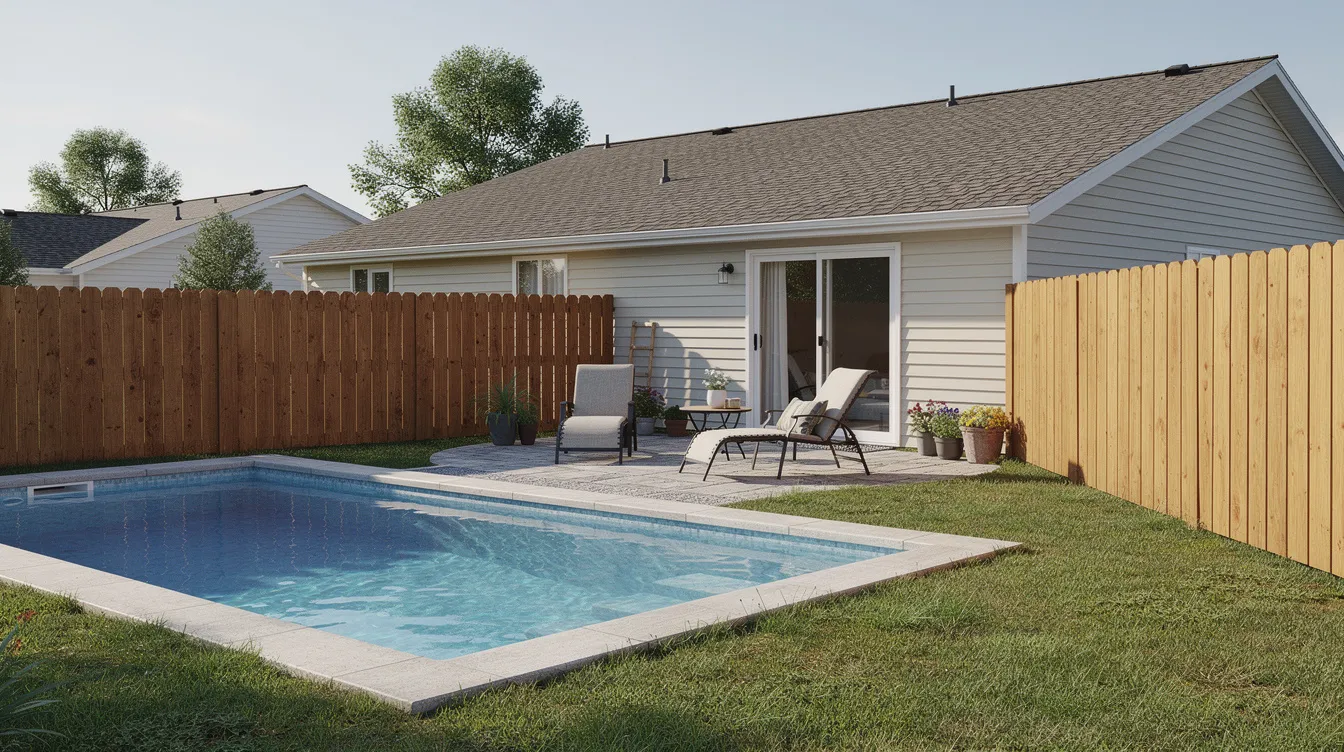
Expect a 1970s–1990s build, 1,200–1,900 square feet, 3 bed/2 bath, with a simple in-ground plaster or gunite pool—no spa, no elaborate outdoor kitchen. Dated tile, older HVAC, and basic landscaping are common. Homes that have already been updated tend to sell above $300K quickly, so the ones still available at this price are usually the ones needing some work.
Beyond your standard home inspection, budget for a dedicated pool inspection covering:
Ask the seller for maintenance records, the date of last resurfacing, and any equipment replacement invoices—this helps with insurance, resale, and negotiating.
Texas summers mean pool equipment runs hard for much of the year, so budget accordingly:
Get pre-approved before you start seriously looking—pool homes in this price range move fast in DFW's competitive market. Set saved searches with a $300,000 ceiling and a "pool" or "private pool" filter, and don't limit yourself to Dallas or Fort Worth city limits; expand 20–30 minutes out to Arlington, Mesquite, or Grand Prairie to widen your options considerably.
Homes needing cosmetic work or an older pool tend to sit longer and leave more room to negotiate. Fully updated pool homes under $300K, when they appear, often draw multiple offers within days.
Conventional, FHA, and VA loans can all be used to finance a DFW pool home. Appraisers in the metroplex generally do assign some added value to a private pool given how common they are locally, but that value rarely covers the full cost of a high-end pool—so don't expect the appraisal to fully offset a big pool investment. Be prepared for a possible appraisal gap if you're already stretching your budget at the top of the price range.
Private pool homes under $300K still exist across DFW in 2026, but they're concentrated in Arlington, East and South Fort Worth, and the southeast Dallas County suburbs—not in Dallas's core neighborhoods. They tend to be smaller, older, and in need of at least cosmetic updates compared to the fully renovated $350K+ pool homes elsewhere in the metroplex.
Balance your must-haves against your nice-to-haves, understand what pool ownership really costs month to month in North Texas, and work with a local agent who regularly handles pool properties in your target area—they'll know which listings are worth a showing and which ones have issues hiding beneath the surface.
This article is for informational purposes only and is not intended to provide legal, tax, financial, or appraisal advice. Real estate market conditions change frequently and vary by neighborhood. Always verify current listing details directly with a licensed Texas real estate professional, and consult appropriate advisors regarding your specific situation.



.png)