

If you’re thinking about buying a home in Texas—especially here in the Dallas–Fort Worth area—understanding what lenders look for can take a lot of the mystery out of the process. This article walks you through the main mortgage requirements step by step, so you know what to expect before you start shopping.
Requirements can vary depending on the loan program and the lender you work with, but most Texas mortgages evaluate the same core factors: your credit, your income and debts, your assets and down payment funds, and the property itself.
My goal here is to give you practical guidance that helps you feel more prepared. This isn’t legal, tax, or financial advice—every situation is different. I always encourage buyers to speak with a licensed Texas lender and a local real estate professional to review their specific circumstances and options.

Before we dive into the details, here’s a quick summary of what most Texas lenders look for:
Most Texas mortgage requirements fall into four main categories: your credit history and score, your income and debts, your assets and available funds, and the property you want to buy.
Most lenders follow national guidelines set by organizations like Fannie Mae, Freddie Mac, the Federal Housing Administration, and the VA. However, individual mortgage lenders may add their own standards—sometimes called “overlays”—that can be stricter than the baseline rules.
The numbers I’ll share in this section (credit scores, DTI thresholds, down payment percentages) are typical examples based on current guidelines. They can change depending on the lender, the loan program, and market conditions. Always verify specifics with your residential mortgage loan originator or loan officer.
Let’s walk through each of the four core factors.
When you apply for a mortgage loan, Texas lenders typically pull your credit report from all three major bureaus: TransUnion, Experian, and Equifax. They usually use the middle of your three scores when evaluating your application.
Here are some general benchmarks:
Loan Type
Typical Minimum Credit Score
Conventional
620+ (may vary by lender)
FHA
580+ for 3.5% down; 500–579 may require 10% down
VA
No official VA minimum, but many lenders look for 620+
USDA
Often 640+, depending on lender
Your credit history matters just as much as your FICO score. Late payments, collections, high credit card balances, and recent new accounts can all affect your approval odds and the interest rate you’re offered.
What you can do:
These are general steps—for personalized strategies, speak with a qualified professional who can review your full financial picture.
Your debt to income ratio compares your total monthly debt payments to your gross monthly income. Lenders use this number to gauge whether you can comfortably handle a new monthly mortgage payment on top of your existing obligations.
Here’s how it works:
Many Texas lenders target a DTI at or below about 43% for conventional loans. Some FHA and other programs may allow higher ratios—sometimes into the mid-50% range—if you have strong compensating factors like excellent credit or significant cash reserves.
Income documentation varies by situation:
Variable expenses like utilities, groceries, and streaming subscriptions aren’t counted in your DTI calculation—but they still matter for your personal budget.
Before you apply, try running a rough estimate of your DTI. Ask your lender how specific debts (like income-based student loan repayments) will be calculated, since rules can vary.
Lenders want to see that you have verifiable funds for your down payment, closing costs, and sometimes additional reserves—meaning extra months of mortgage payments left in savings after closing.
Common acceptable sources of funds:
Typical down payment ranges in Texas:
Loan Type
Typical Down Payment
Conventional
As low as 3%–5% for many buyers
FHA
3.5% with 580+ credit score
VA
Potentially 0% for eligible borrowers
USDA
Potentially 0% in eligible rural areas
Larger down payments can sometimes improve your approval odds and lower your monthly payments, but they’re not always required to buy a home in the DFW area.
One important note: “cash under the mattress” usually can’t be used without proper documentation. Large recent deposits in your bank statements often need a written explanation showing where the money came from.

The home you want to buy must meet certain standards before a lender will approve the loan. The appraised value needs to support the loan amount, the property must be in acceptable condition, and it must comply with the guidelines of your specific loan program.
Key property-related factors:
I always encourage buyers to talk with their lender and agent early about how property taxes in their target city—whether that’s Dallas, Fort Worth, Arlington, Plano, or elsewhere—may impact their maximum price range.
Most Texas buyers choose from a few major mortgage options: conventional loans, FHA loans, VA loans, or USDA loans in eligible rural areas. Each program has its own baseline guidelines for credit, down payment, DTI, and occupancy—and individual lenders may apply stricter standards.
This section is an overview to help you ask better questions when you meet with your lender. There’s no one-size-fits-all answer for which loan type is “best”—it depends on your situation, goals, and financial profile.
Conventional loans typically follow guidelines set by Fannie Mae and Freddie Mac. They’re popular among buyers with stronger credit profiles and stable employment history.
Common requirements:
One advantage of conventional loans: if your equity grows past 20%, you may be able to request removal of private mortgage insurance, which can lower your monthly payments over time.
Texas conventional loan limits for single-family properties are aligned with federal conforming limits. For 2026, the baseline is $832,750, which gives buyers more room before needing a jumbo loan.
Texas FHA loans are government-insured options backed by the Federal Housing Administration. They often work well for buyers with lower credit scores or smaller down payments.
Common requirements:
FHA loan limits vary by Texas county. Most are in the low $500,000 range for single-family homes, with some counties set higher. Limits are reviewed annually.
VA loans are available to eligible veterans, active-duty service members, and some surviving spouses. They’re guaranteed by the U.S. Department of Veterans Affairs and offer several potential benefits.
Key features:
If you’re eligible, request a Certificate of Eligibility (COE) and work with a lender who handles VA loans regularly. These can be excellent options for those who qualify.
USDA Rural Development loans may offer 0% down payment for eligible borrowers purchasing in designated rural and some suburban areas. Availability depends on property location and household income limits.
For a family of one to four in many Texas areas, income limits are often around $103,500, though this varies by county and is updated periodically.
Texas buyers may also explore payment assistance programs offered through organizations like the Texas State Affordable Housing Corporation (TSAHC) or the Texas Department of Housing and Community Affairs (TDHCA). These programs have their own eligibility rules separate from the lender’s requirements.
Ask your lender and real estate professional about current down payment assistance options that may be available in DFW and across Texas.
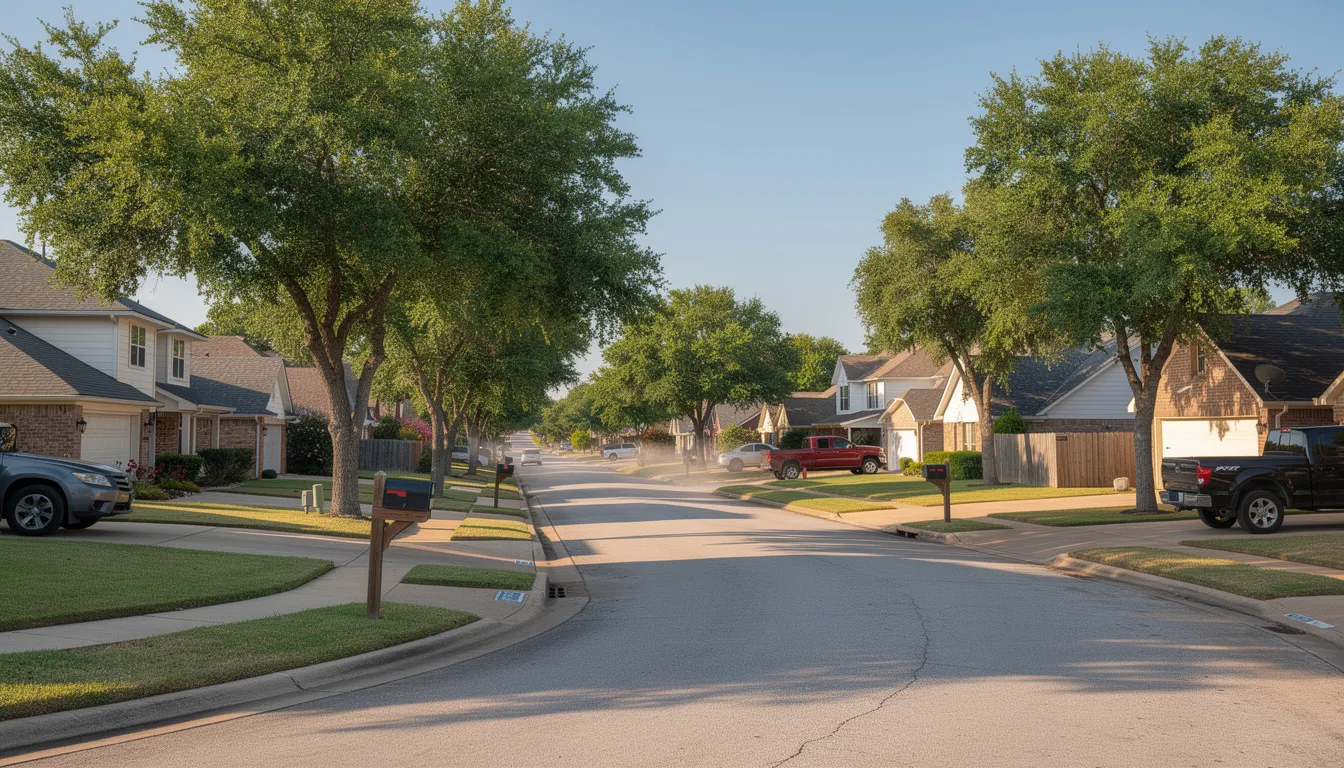
In the Lone Star State, property taxes, homeowners insurance, and sometimes HOA dues can significantly impact your total monthly payment and what you qualify for.
These costs are usually included in the lender’s payment estimate when calculating your DTI. A home that looks affordable based on purchase price alone may stretch your budget once taxes and insurance are factored in.
Texas doesn’t have a state income tax, so local governments rely heavily on property taxes. This can be a major piece of your monthly mortgage payment.
What to expect in DFW:
Area
Approximate Combined Tax Rate
Dallas County
Often 2.0%–2.5%+
Tarrant County
Often 2.0%–2.4%
Collin County
Often 1.9%–2.3%
Denton County
Often 1.8%–2.2%
These are rough ranges—actual rates depend on the specific city, school district, and other taxing entities. Rates can change over time, so always verify estimated taxes on properties you’re serious about.
Lenders typically use current tax estimates or county records when calculating qualification. Large increases in assessed value after purchase can affect your future escrow payments.
Homeowners insurance is required by most lenders and can vary based on location, coverage level, roof age, and claims history. In some parts of Texas where severe weather is more common, premiums may be higher.
HOA dues for condos, townhomes, and some single-family communities in DFW are also included in the lender’s monthly payment calculation. These can range from under $100 to several hundred dollars per month, depending on the community and amenities.
Request estimated insurance quotes and HOA information early in your home buying process so there are fewer surprises during underwriting.
Organized paperwork can make the mortgage application and approval process smoother and faster. While exact requirements vary by lender and loan program, most Texas buyers are asked for similar core documents.
Think of this as your pre-application checklist. Electronic copies (PDFs) are usually acceptable and often preferred for online applications.
For W-2 employees:
For self employed or commission-based borrowers:
Lenders often verify employment directly with employers, so let your HR or payroll department know a verification request may come through.
If you recently changed jobs, industries, or pay structure, discuss this upfront with your lender to set expectations.
Typical requests include:
Large unexplained cash deposits often need documentation—gift letters, sale receipts, or other proof of where the money came from. Gift funds from allowed relatives typically require a formal gift letter and proof of transfer.
Keep your funds stable in one or two main accounts before and during the mortgage process. This minimizes extra questions from underwriters.
Standard ID requirements include:
Once you’re under contract, you’ll provide the executed purchase contract. The lender and title company will coordinate on the appraisal, title work, and property-specific loan documents.
If you have past bankruptcies, foreclosures, or divorces, gather related discharge papers, decrees, and settlement documents. Lenders may need these to complete their review.

Here’s a walk-through of the typical sequence from pre-approval to closing for a buyer in the DFW or broader Texas market.
Timeframes can vary based on lender workload, appraisal scheduling, title research, and how quickly you provide documents. Getting fully pre-approved before touring homes often makes the offer process smoother and more competitive.
There’s a difference between pre-qualification and pre-approval:
A pre-approval letter usually lasts around 60–90 days, depending on the lender and any major changes to your finances.
At this stage, the lender typically reviews your credit report, income documents, bank statements, and an initial loan application. Ask for both an estimated maximum price and a comfortable payment range—not just the top number you could theoretically qualify for.
The typical loan process includes:
Underwriters may ask for clarification or additional documents at several points—letters of explanation, updated pay stubs, or new bank statements. Respond promptly to keep things moving.
Texas purchase contracts commonly allow a 30–45 day close, though this can be shorter or longer depending on the situation and loan type.
Important: Avoid major changes during underwriting. No new loans, large purchases, or job changes without talking to your lender first. These can delay or derail your closing process.
You’ll receive a Closing Disclosure (CD) at least 3 business days before signing. This document summarizes your final loan terms, monthly payment, interest rate, and closing costs.
In Texas, closings typically take place at a title company. You’ll sign the loan documents, pay any remaining funds, and complete final paperwork.
Once funding is authorized and the deed is recorded, you can usually receive your keys—often the same day or shortly after, depending on timing.
Review the CD carefully with your lender before closing day. Ask questions early to reduce stress and avoid last-minute surprises.
These are simple, actionable habits that often make it easier to qualify for a home loan and move smoothly through underwriting. They’re based on what I’ve seen work well for DFW buyers over the years.
These are general suggestions—consult your lender or financial professional before making major changes to your finances.
A stable, predictable credit history often makes underwriting smoother and may help with interest rate options.
Set aside funds for more than just the down payment. You’ll also need money for:
In many Texas transactions, buyers and sellers may negotiate credits toward closing costs, but these aren’t guaranteed and depend on offer terms and market conditions.
Create a simple monthly budget that includes your projected monthly mortgage payment based on current interest rates and tax estimates in your target area. Calculate what’s comfortable—not just what you could qualify for.
In my experience, buyers who respond quickly and ask questions openly tend to feel more confident and less stressed through closing.

There’s real value in having a local team—agent, lender, and title company—who understand Texas contracts, timelines, and property-specific requirements.
As a Keller Williams Realtor serving the Dallas–Fort Worth area, my focus is on education and guidance, not pressure. I work with buyers to coordinate price range expectations, offer strategy, and contract timelines with their lender’s pre-approval.
Whether you’re a first time buyer just starting to explore homeownership goals or you’ve purchased before and know what you want, having someone local who can answer questions and help you navigate the process makes a difference.
If you’re planning to buy in DFW or nearby Texas communities, I’d be happy to have a conversation about your plans and what steps to take first. Sometimes just understanding your options is enough to move forward with confidence.
Texas mortgage requirements generally center on four main factors: your credit score and credit history, your income and debt to income ratio, your assets and down payment funds, and the property itself—including its taxes and insurance costs.
There’s no one-size-fits-all answer. The right loan and qualification path depend on your unique situation, goals, and timeline. What works for one borrower may not be the best fit for another.
My recommendation: start early, get pre-approved, and work with a licensed Texas lender and a local real estate professional who can provide proof of what you qualify for and guide you through each step.
If you have questions about buying a home in the DFW area, reach out. I’m here to help you understand your options and feel confident about the path ahead.
This article is for informational purposes only and is not intended to provide legal, tax, or financial advice. Real estate laws and market conditions vary. Always consult with a licensed real estate professional or appropriate advisor regarding your specific situation.



.png)